When Calf Strains Derail Your Half-Marathon Training
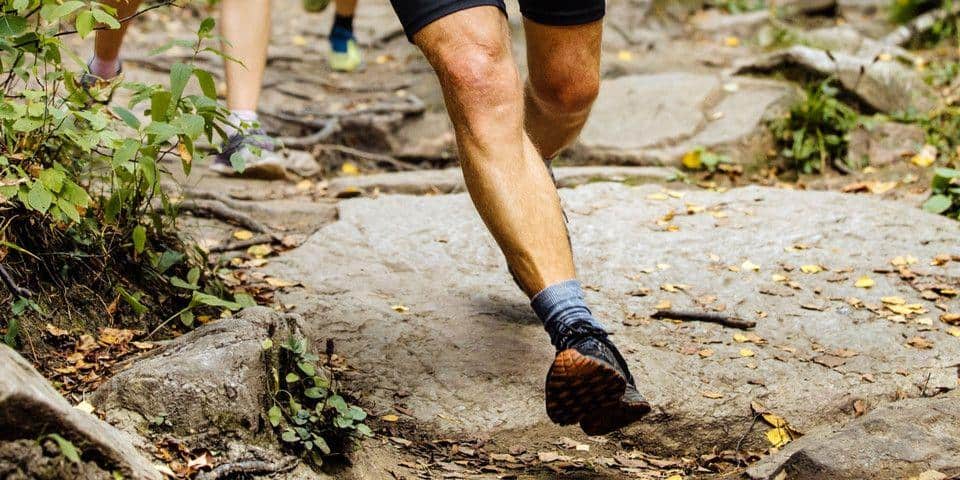
Langley runners picture this: you’re 3 km into your half-marathon training program when your right calf suddenly seizes up. Sharp pain and tightness stop you in your tracks. To make matters worse, you’re only three weeks out from the Vancouver BMO Half-Marathon. The frustration hits immediately, and those negative thoughts creep in — am I going to have to drop out?
Sound familiar? It happened to me.
Research shows that about 1 in 4 recreational runners are sidelined by calf strains each year. The good news? With the right combination of physiotherapy and massage therapy, recovery time can often be reduced by up to 40%.
When I was training for my first half-marathon, I was running four times a week following a standard training plan. My goal was to complete the race in under 1:40 (about a 4:45/km pace). I rotated between runs on the Port Coquitlam dikes and tempo sessions at the track.
One thing I started to notice: during my speed workouts, my right calf would consistently tighten up more than my left, especially when running counterclockwise around the track. In hindsight, it makes total sense. Those endless left turns mean your outside leg (in my case, the right) is constantly working harder to stabilize and push off.
If I could go back, I’d switch directions during track sessions or stick to straight routes to avoid overloading one side. Small changes like that can make a huge difference in preventing overuse injuries, and keeping you on pace for race day.
At Revamp Wellness in Langley, BC (and Soon Cloverdale/Surrey, BC), we’ve treated over 200 calf strains in the last year alone. This guide combines our clinic’s proven protocol with 3 YouTube videos you can follow at home—starting today.
Quick Navigation
- 1. Spot the Injury Early
- 2. First 72 Hours: PEACE & LOVE
- 3. Physiotherapy Rehab Plan
- 4. Self-Massage & ASMR Release
- 5. Return-to-Run Timeline
- 6. Prevention Checklist
1. How to Spot a Calf Strain Before It Worsens
- Grade 1 (Walkable, tight): Dull ache after runs, resolves in 24 hrs (This was my case)
- Grade 2 (Limping): Sharp pain mid-stride, bruising, swelling
- Grade 3 (Can’t bear weight): Pop sound, immediate collapse
I thought it was just tightness. Even after a few days rest every time I went back out to run my calf would seize up after 1km into the workout.
2. First 72 Hours: What to Do (and Not Do)
Forget RICE. The PEACE & LOVE protocol (Dubois & Esculier, 2020) is the gold standard:
| Phase | Action |
|---|---|
| Protection | Crutches if limping |
| Elevation | Above heart when resting |
| Avoid NSAIDs | Delays healing |
| Compression | Light wrap (not too tight) |
| Education | Watch our 3-min recovery video below |
3. Physiotherapy Rehab: From Pain to PRs
Start Day 4–7 (pain < 3/10). Our clinic uses:
- Soft-tissue mobilization at the gastroc-soleus junction
- Dry needling for trigger points (80% pain reduction in 1 session)
- Eccentric loading to rebuild tendon resilience
| Exercise | Sets/Reps | Progression |
|---|---|---|
| Eccentric Heel Drops | 3×15 (slow 3-sec lower) | Add backpack weight Week 3 |
| Banded Ankle Dorsiflexion | 3×20 | Fixes tight calves |
| Single-Leg Calf Raise | 3×12/side | Hold 2 sec at top |
4. Massage Therapy: ASMR Calf & Hamstring Massage Therapy | Deep Muscle Relaxation
Massage reduces scar tissue and improves blood flow. Do after physio exercises.
For runners who have never had a massage. Here is one of our latest videos on what a runners massage would look like:
Pro technique: Use a lacrosse ball under the calf while seated—roll for 2 min, then stretch.
Self-Massage Routine (5 min daily)
- Foam roll quads → hamstrings → calves (30 sec each)
- Trigger point ball on soleus (knee bent)
- Effleurage strokes toward the heart
5. Return-to-Run Timeline (Grade 2 Example)
- Week 1: Walk 20 min pain-free
- Week 2: Walk/run intervals (1 min run, 2 min walk)
- Week 4: 80% pre-injury volume
- Week 6: Hill sprints (if pain = 0/10)
Book a gait analysis before full return → Book Now
6. Prevent Calf Strains Forever: Langley Runner Checklist
- Replace shoes every 400–500 km
- Warm up with ankle circles + leg swings
- Strength train 2x/week (glutes, core, calves)
- Get a custom orthotic if you overpronate
Ready to Run Pain-Free in Langley?
Book your Runner’s Assessment (gait analysis + physio consult) today. Book Now →
📍 Revamp Wellness | 8029 199 street, Unit 120, Langley, BC | Open 7 days/week | (604) 513-8422
FAQ: Calf Strain Recovery for Runners
Q: How long does a calf strain take to heal? A: Grade 1: 1–2 weeks | Grade 2: 3–6 weeks | Grade 3: 8+ weeks
Q: Can I run through calf tightness? A: No—tightness is a warning. Stop and stretch/roll.
Q: Is massage or physio better? A: Both. Physio rebuilds strength; massage improves tissue quality.
Subscribe for weekly health tips: http://www.youtube.com/@revampwellnessintegratedhealth
To wrap up my recovery story, luckily, it turned out to be only a grade 1 calf strain. With consistent dry needling sessions twice a week and a dedicated home exercise program, I was able to get back to full strength just in time for race day.
Even without a single practice run after the injury, I managed to complete the Vancouver BMO Half-Marathon pain-free, finishing in 1:39, right on goal. It was a huge relief and a good reminder that with the right treatment plan and patience, your body can bounce back stronger than you expect.
Learn more about our 5-star rated integrated health clinic by visiting our website at revampwellness.ca
